Tour to Nepal or Nepal exploration, The package itself suggests its grandeur. With this, you will be deeply exploring some leading natural, cultural, religious, and historical riches. Your exploration kicks off in Kathmandu, the city of the temple. Virtually, every nook is occupied with temples of varying sizes. Their ubiquity will intrigue you. Besides, there are several antiquated sites and monuments. Hence, walking in Kathmandu care-freely is tantamount to observing a museum.
The Pashupatinath is one of the major Hindu Pilgrim sites revered all over the globe. Also, there are several humongous stupas and monasteries, the Swoyambhunath being the major. In addition to all this, the valley has ancient palaces known as the Durbar Squares whose art and architecture are immensely arresting.
The Narayanhity Palace has been turned into a museum since the country got rid of monarchy over a decade ago. It displays all the official possessions of the former royal family. The city has several world heritage sites. The Kathmandu valley is arguably the main place to get a peek into the art and history of Nepal.
After being overwhelmed by cultural, religious, and historical sites in the valley, you might want something natural which may work as a sort of dessert—Nagarkot will serve this purpose. Famous for Himalayan views at sunrise and sunset, Nagarkot is 32 km north-east of Kathmandu. Densely forested hills of pine trees surround it. The view will be unspeakably exhilarating. This beautiful hilltop will broadly give you the views of eight out of thirteen Himalayan ranges in Nepal. A soothing sight to behold!
After this, it will be ideal to visit the Namo Buddha, an important pilgrim site for the Buddhists. It will double down your peace and tranquility. The stupa is situated in a pleasant and peaceful environment.
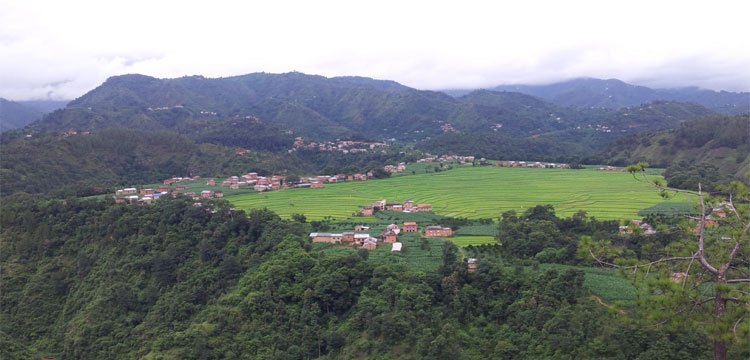
The exploration won’t be complete without touring a typical village. Balthali is one such where you will be staying for a night. It is a beautiful idyllic village dominated by the Tamang and Newar people. You will be simply amazed by seeing the farming done on terraced slopes.
Likewise, Pokhara is unmissable. It is a major tourist destination and considered the tourism capital of Nepal. It is also famous for adventure tourism, like paragliding, bungee jumping hiking, trekking. There are two hilltops. The lakes are fetching. The Phewa Lake is adored for boating.
Hence, Tour to Nepal not only you will explore the Historical and Cultural tale but also much more to learn about ancient time architecture used to build the old temple, stupas, and different structure on it.
Day 01: Arrival in Kathmandu
Day 02: Visit Kirtipur / Swoyambunath & Patan
Day 03: Drive Kathmandu to Nagarkot via Bhaktapur & Changunarayan
Day 04: Trek Nagarkot to Nala & drive to Balthali
Day 05: Trek Balthali to Namobuddha
Day 06: Drive Namo Buddha to Kathmandu & visit Pashupatinath & Boudhanath
Day 07: Drive Kathmandu to Sedi Bagar via Pokhara
Day 08: Drive Sedi Bagar to Kande & trek to Landruk
Day 09: Trek Landruk to Ghandruk
Day 10: Trek Ghandruk to Syauli Bazaar & drive to Pokhara
Day 11: Drive Pokhara to Kathmandu
Day 12: Departure
Day 01: Arrive in Kathmandu airport and you will be transferred to the Hotel by one of our representatives. Welcome dinner at one of the Nepali traditional restaurants in Kathmandu.
Overnight: Hotel
Elevation: 1334m
Day 02: Visit Kirtipur, Swoyambunath and Patan: start our tour with the historical fort town Kirtipur which is about an hour drive from Kathmandu. Then we visit magnificent Buddhist stupa called Swoyambhunath followed by a visit of Patan.
Kirtipur - Originally a Newari foundation, Kirtipur is still a centre of Newari culture. It has been merged with surrounding villages to form the municipality of Kirtipur. It consists of many temples, monasteries. The town which dates from 1099 A.D. straddles two hills and a large pond in between. It is a natural fortress.
Swoyambhunath is one of the oldest stupa of the Kathmandu Valley. It is situated on one of the highest hills in the valley. It watches over the Valley from the top of a hillock on its western side just three kilometers west of the city center. The stupa is one of the holiest Buddhist sites in Nepal and its establishment is linked to the creation of the Kathmandu Valley out of a primordial lake. Swayambhu is also known as Samhengu and is recognized as a World Heritage Site. It is also one of the oldest and most glorious Buddhist shrines in the world which is said to be two thousand years. The four sides of the stupa are painted with the eyes of Lord Buddha.
Patan- the second largest town in the valley is situated to the south of Kathmandu. Patan's great building boom took place under the Mallas in the 16th, 17th and 18th centuries. Numerous temples of widely diverse styles, as well as many Buddhist monasteries, are scattered around the fascinating town. Patan is famous for its crafts and metal works which are wonderful souvenirs.
Overnight: Hotel
Day 03: Drive Kathmandu to Nagarkot via Bhaktapur and Changunarayan: Today we drive to the oldest part of the Kathmandu valley called Bhaktapur. This fascinating city reminds you the true culture and living style of medieval period. After visiting Bhaktapur, we visit another ancient village called Changunarayan. Then an exciting drive for an hour on a winding road to one of the most popular hill stations, Nagarkot; which offers great view of Himalayas and an ideal place to get refreshed from Kathmandu's hustle bustle.
Bhaktapur- Located about 20 km east of Kathmandu in the Kathmandu Valley, Bhaktapur is known as the 'City of Devotees', the 'City of Culture', the 'Living Heritage', and 'Nepal's Cultural Gem'. It is one of the 3 royal cities in the Kathmandu Valley. We will visit four different squares in this city: Durbar Square (palace square), Tamaudi Square (public square), Pottery Square and Dattatrey Square.
Changunarayan is a fascinating place where you may see oldest Manu script found in Nepali history and some magnificent temples.
Nagarkot – One of the most popular hill station / viewpoints close to Kathmandu valley. Several different mountain peaks of different regions including Mt. Shisapangma of Tibet can be seen.
Overnight: Hotel
Day 04: Trek Nagarkot to Nala and drive to Balthali: exciting hike to Nala after our enjoyable morning with Himalayan view. It is about two and half hours trek to Nala then a short drive takes us to the village called Balthali.
Overnight: Resort
Day 05: Trek Balthali to Namobuddha: start our trek through the lush vegetation and goes through several small villages. It is about 4 hours trek to get to Namobuddha.
Namo Buddha or Takmo Lujin is a very sacred place for the Buddhists. The Stupa situated just off to the downtown Kathmandu is visited by scores of pilgrims every year. There is a legend behind the reverence of this place. According to the Buddhist legend, the King Mahasattva gave his body to a hungry tigress at this place. His reliquary Stupa remained underground for centuries. One day a hermit called Bhagavan (Sakyamuni) came to this site and got attracted to the bulge. It is said that he clapped his hands, and miraculously the Stupa appeared.
Overnight: Resort
Day 06: Drive Namobuddha to Kathmandu and visit Pashupatinath and Boudhanath: on our way back from Namobuddha, we visit a Hindu temple Pashupatinath followed by a Buddhist stupa, Boudhanath. Then in the evening, we participate in Buddhist puja ceremony at Sheichan Bairoling Monastery.
Pashupatinath Temple is one of the holiest pilgrimage destinations for all the Hindus of the world. The temple is dedicated to Lord Shiva, one of the trinity and the guardian (patron) deity of Nepal. This is one of the oldest temples, situated on the banks of the Holy Bagmati River. It is a double–roofed golden temple with four triple silver doorways. Pashupatinath covers an area of 281 hectares, which is one of the biggest temple complexes in Nepal.
Bouddhanath Stupa lies about 6 km east of downtown Kathmandu and it is the largest stupa in the Valley and one of the largest in the world. It presents one of the most fascinating specimens of stupa design with hundreds of prayer wheels and 108 small images of Buddha all around. Just like Swoyambhunath, this stupa has four sides with the watchful eyes of Lord Buddha. All the Buddhists throng to this stupa to take part in the sacred rituals during the Buddhist festivals.
Overnight: Hotel
Day 07: Drive Kathmandu to Sedi Bagar via Pokhara: a scenic drive to Pokhara and continue to it's outskirt to Sedi Bagar followed by a short walk to the Thapa family home.
Overnight: Hidden Paradise (Family Guest House)
Day 08: Drive Sedi Bagar to Kande and Trek to Landruk (1565m): start our day with a short drive to Kande then start our trek to Landruk. The trek starts with a steep uphill through the forest and gets gradual after an hour of walk. We continue our walk through paddy field and rhododendron forest enjoying the magnificent view of Fish Tail (6993m) and Annapurna. After our lunch break in Deurali, trail descends to Tolka, a small settlement then continue with gradual downhill walk all the way to Landruk, one of the oldest and fascinating places of this region. It is a small place but has a true Gurung (one of the ethnic groups) culture.
Overnight: Lodge
Walking Time: 5 hours
Difference in Elevation: + 745m.
Day 09: Trek Landruk to Ghandruk (1940m): Today, the trek descends to Modi khola followed by steep climb on stairs. It is steep uphill for about 2 hours, however, the view of the mountains are spectacular throughout the whole day/trek. It is comparatively short day than previous one so you can have enough time to explore the Ghandruk village. Ghandruk is the biggest village in this region. The Mountain View from Ghandruk is superb. In the afternoon, we explore old part of the Ghandruk which still has traditional Gurung round houses. We also visit a Gurung museum.
Overnight: Lodge
Walking time: 3 hours
Difference in Elevation: + 375
Day 10: Trek Ghandruk to Syauli Bazaar and drive to Pokhara (820m): on the third day of our trek, we descend to Sauli Bazaar and hop on to a local Jeep and drive to Pokhara.
Overnight: Hotel
Walking time: 2 - 3 hours
Driving Time: 1 1/2 hour
Difference in Elevation: - 1120m
Day 11: Drive Pokhara to Kathmandu: a scenic drive for about 8 hours back to Kathmandu.
Overnight: Hotel
Day 12: Transfer to the airport and departure
Weather Report

Climate:
From the eternal snow of the high peaks to the extensive tropical lowlands, Nepal has a wide variety of climates.
Spring: March to late May: In this season, Kathmandu is in full bloom, lots of different types of flowers can be seen at this time of the year. Temperature is mild, end of the cold winter and approaching warm and hot summer. Temperatures vary between 10 ° C to 28 ° C but can rise up to 30 ° C. Between 2000 and 3000m, temperature rarely drop below 0 ° C. However, few frosts or snowfalls are possible in March above 4000 m.
The summer/monsoon period: It interrupts the majority of trekking from late June to late August. Some of the trekking regions "trans-Himalayan", Dolpo and Mustang, however, remain protected from monsoon prevailing rest of the country. They are the only channels available in Nepal in the summer.
Autumn: mid September – mid December - Perfect temperature and weather for trekking. Brings cooler days, but clear skies. Above 3000 m altitude, temperatures can drop to -10 ° C at night.
In winter: mid-December - mid-February - Nights are generally cold, dry climate, Above 3000m, temperature drop down to 0 ° C to - 15 ° C at night, the days are often sunny.


“JUST arrived back from Manaslu Trek, Nepal (this was our 5th trip to Nepal), And visit MERANGDING and ANGPANG villages […]
“I had such a great time while in Nepal. Chandra definitely made enjoyable environment for our such an extremely diverse […]